Gie Yong Bio Temple is one of three historic Chinese temples in Lasem, Rembang Regency. It is widely known as a symbol of unity between the Javanese and Chinese communities because it honors three Lasem heroes who fought together against the Dutch East India Company, or VOC.
Compared with Lasem’s other temples, Gie Yong Bio is relatively easy to find. Visitors traveling along the main road between Lasem and Rembang can follow the sign directing them toward the temple.
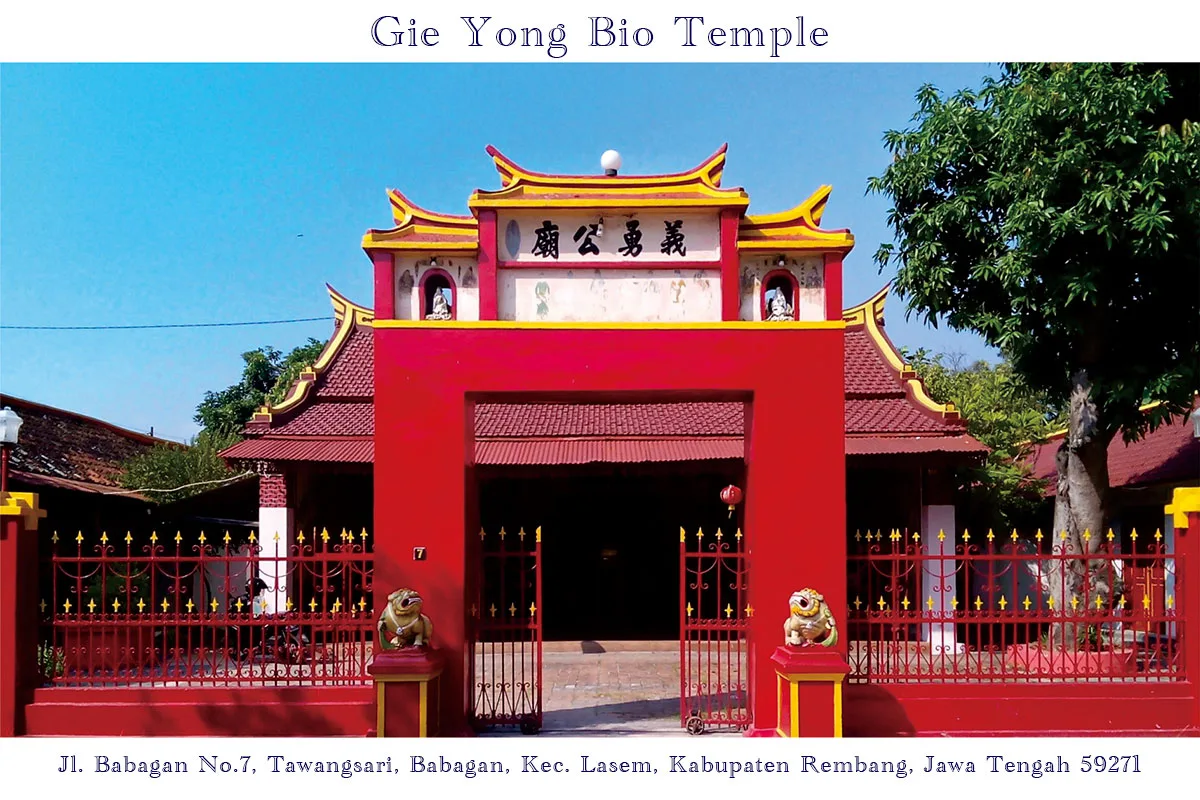
Gie Yong Bio Temple is located at Jalan Babagan No. 7, Babagan Village, Lasem District, Rembang Regency, Central Java. It stands south of the Kampung BNI Batik Tulis Lasem area.
The History of Gie Yong Bio Temple
Gie Yong Bio Temple is believed to have been established in 1780. According to local stories, its original building stood closer to the main road and initially faced east.
A significant change took place after the Great Post Road, formerly known as the Groote Postweg or Daendels Road, became increasingly busy. This colonial route developed into one of the most important roads passing through Lasem.
When the temple was renovated in 1915, its orientation was changed to face north toward the main road. This adjustment connected the front of Gie Yong Bio more closely with Lasem’s developing urban route.
Honoring Three Heroes of Lasem
One of the most distinctive features of Gie Yong Bio Temple is the historical figures honored inside it. The temple commemorates three heroes of Lasem: Tan Kee Wie, Oey Ing Kiat, and Raden Panji Margono.
They are remembered for leading the people of Lasem in their resistance against the VOC between approximately 1741 and 1750. In local history, the conflict is known as the Godou Balik War and forms an important chapter in Lasem’s colonial past.
Their struggle demonstrates how the Javanese and Chinese communities of Lasem united against a common enemy. Their different cultural backgrounds did not prevent them from working together to defend the region.
The Struggle of Tan Kee Wie
Tan Kee Wie was one of the important figures in the resistance against the VOC. He is remembered for leading a maritime force during the conflict.
His fleet was reportedly attacked in the strait between Ujung Watu and Mandalika Island. After being struck by VOC cannon fire, his ship sank and Tan Kee Wie lost his life in the struggle.
His courage has continued to be remembered by the people of Lasem and forms part of the history preserved at Gie Yong Bio Temple.
Oey Ing Kiat and Raden Panji Margono
Oey Ing Kiat was a prominent Chinese figure who held an important position in Lasem. He was also known by his Javanese title, Raden Ngabehi Widyaningrat, and is described in several historical accounts as a former ruler of Lasem and a leader within its Chinese community.
During the resistance against the VOC, Oey Ing Kiat is said to have died in the Layur area. Raden Panji Margono, a Javanese nobleman, reportedly lost his life in Karangpace, Narukan.
Despite their different cultural backgrounds, the three leaders shared the same purpose. Their friendship and collective struggle later became a symbol of the close relationship between the Javanese and Chinese communities in Lasem.
Raden Panji Margono as the Javanese Kong Co
To honor the contributions of these three heroes, Lasem’s Chinese community established Gie Yong Bio as both a sacred place of remembrance and a historical monument.
Tan Kee Wie, Oey Ing Kiat, and Raden Panji Margono are honored as Kong Co. The statues of Tan Kee Wie and Oey Ing Kiat are placed side by side, while Raden Panji Margono’s statue occupies a separate altar.
The veneration of Raden Panji Margono is one of the temple’s most remarkable features. As a Javanese historical figure, he is popularly known as the “Javanese Kong Co” and is regarded as an exceptionally rare indigenous figure within the traditions of Chinese temples in Indonesia.
His presence demonstrates that the temple’s respect for historical figures extends beyond ethnic identity. Courage, friendship, sacrifice, and collective struggle are the central values being preserved.
For this reason, Gie Yong Bio is often described as the “Temple of Cultural Unity.” It symbolizes the harmonious relationship between Javanese and Chinese communities that has developed in Lasem over centuries.
The Architecture of Gie Yong Bio
Although the main temple building is not particularly large, Gie Yong Bio has a spacious enclosed courtyard. From the front yard, visitors pass through a Chinese-style gateway dominated by shades of pink and red.
A pair of guardian lion statues stands in front of the gateway, facing in different directions. In traditional Chinese architecture, guardian lions commonly symbolize protection and are placed at entrances to sacred or important buildings.
After passing through the gateway, visitors enter the courtyard in front of the main prayer hall. A brass hiolo, or incense burner, stands directly before the main entrance and is used by worshippers to place burning incense sticks.
Several altars can be found inside the main building. Its decorations, colors, ritual objects, and sacred spaces reflect the distinctive character of a historic Chinese temple.
A Place of Worship for the Three Teachings
Gie Yong Bio serves followers of Tri Dharma, or the Three Teachings. It provides an integrated place of worship associated with Buddhist, Taoist, and Confucian traditions.
In addition to the altars honoring Tan Kee Wie, Oey Ing Kiat, and Raden Panji Margono, the temple contains altars dedicated to several respected deities and teachers.
These include Hok Tek Ceng Sin, the God of the Earth; Confucius; Lao Tzu; and Kuan Yin, the Bodhisattva of Compassion. The presence of these altars reflects Gie Yong Bio’s role as both a religious center and a shared spiritual space.
Lasem’s Legacy of Tolerance
Gie Yong Bio Temple preserves more than the history of resistance against the VOC. It also communicates an enduring message about friendship, unity, and tolerance between communities.
Honoring two Chinese figures and one Javanese nobleman within the same temple provides a powerful illustration of Lasem’s multicultural identity. This legacy remains relevant today, particularly as an example of harmony across different cultural and religious backgrounds.
For travelers, visiting Gie Yong Bio offers an opportunity to discover another side of Lasem’s history. In addition to observing its architecture and altars, visitors can learn about the collective struggle that helped shape the town’s identity.
As Gie Yong Bio remains an active place of worship, visitors should maintain a respectful atmosphere, wear appropriate clothing, follow the temple’s rules, and avoid disturbing religious activities.
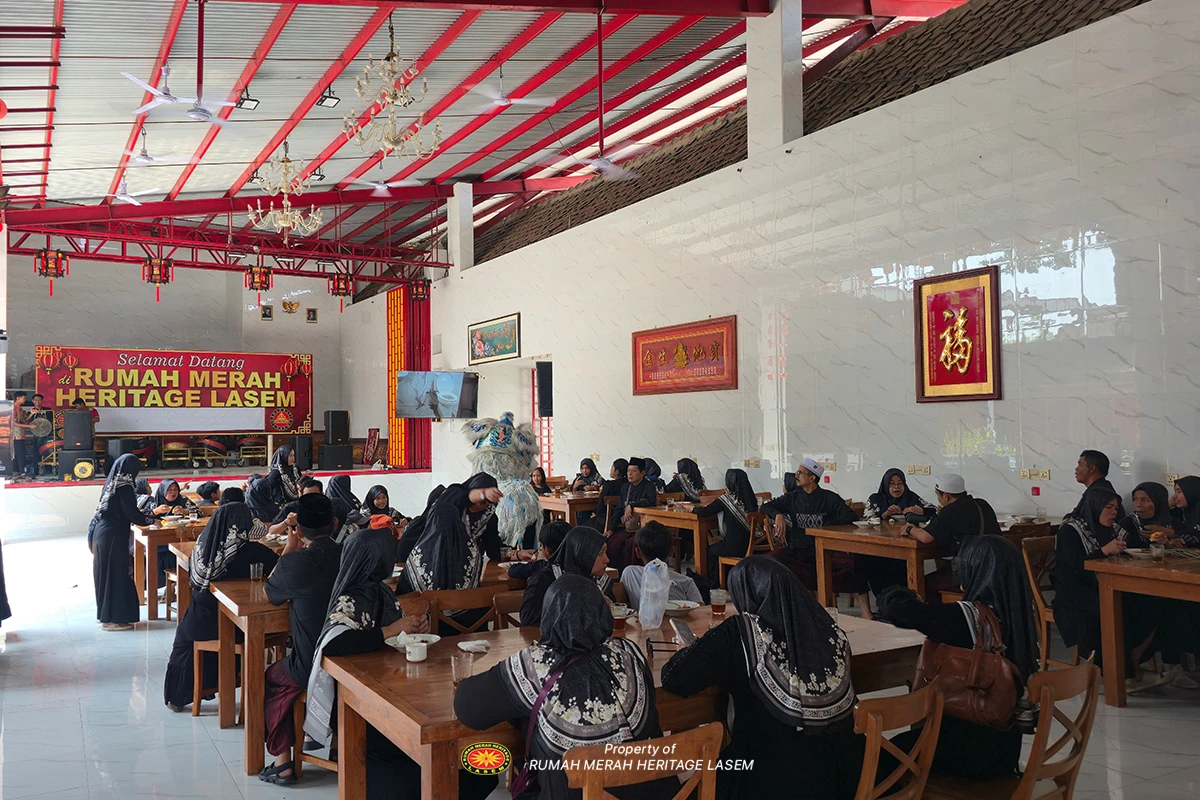
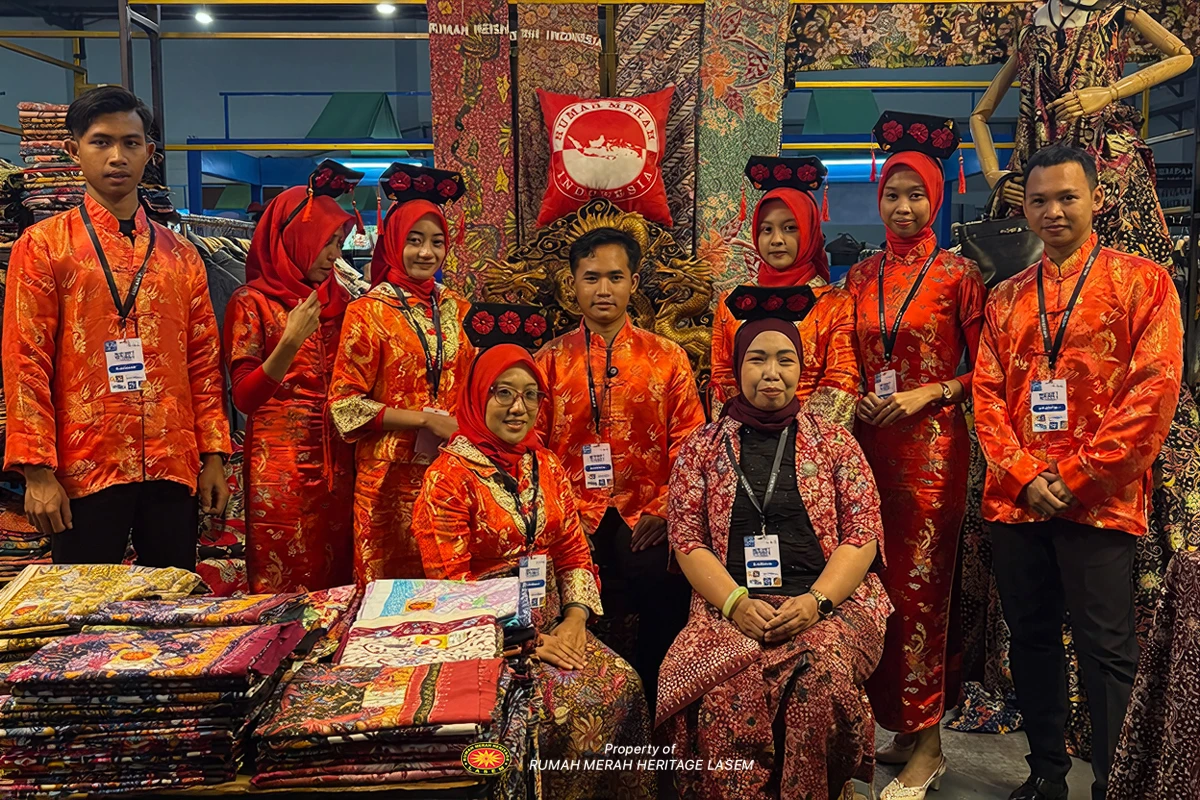
If you would like to explore the story of Gie Yong Bio and visit other historical destinations in the area, you can join a heritage journey with Rumah Merah Heritage Lasem. After discovering Lasem’s cultural sites, traditional cuisine, and historic Chinese quarter, you can also stay at Rumah Merah Heritage Lasem and experience the atmosphere of a heritage building in a town renowned for its tradition of tolerance.