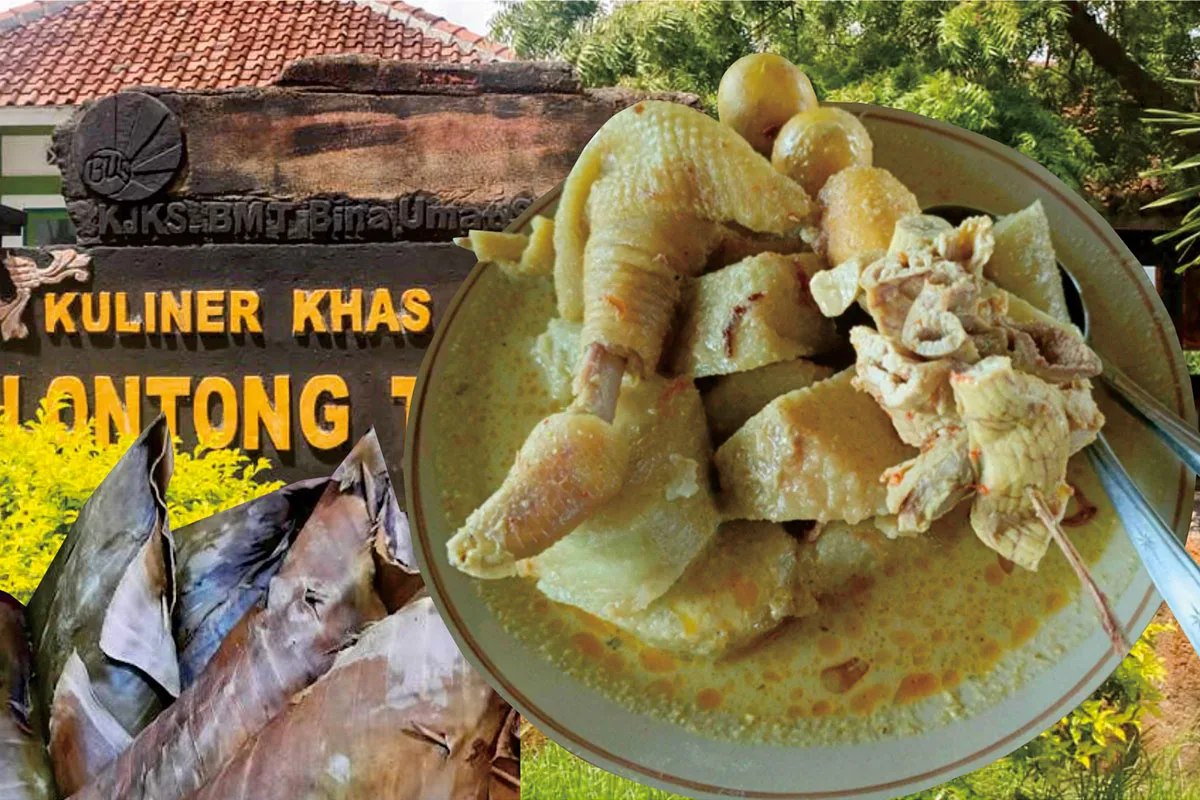
Lontong Tuyuhan is one of the traditional dishes of Rembang, Central Java. Its history is closely connected to Lasem and the spread of Islam throughout the surrounding region. At first glance, this dish resembles Indonesian chicken opor, but its broth has a noticeably spicier flavor because it is prepared with red chilies and a variety of local spices.
In addition to its rich and spicy broth, Lontong Tuyuhan is known for the distinctive shape of its rice cake. The lontong is wrapped in banana leaves, formed into a triangle resembling a ketupat, and secured with three small bamboo pins. According to local stories, its shape and the use of three pins are associated with values inspired by the teachings and traditions of the Prophet Muhammad.
The Origin of Lontong Tuyuhan
The name Lontong Tuyuhan comes from Tuyuhan Village in Pancur District, Rembang Regency. The dish is believed to have originated in this village before becoming widely recognized as one of Rembang’s most distinctive traditional foods.
Lontong Tuyuhan was originally served as a manakib meal to the students of Mbah Jumali. He was an Islamic scholar who played an important role in spreading Islam throughout Lasem and its surrounding areas. His tomb can now be found within the grounds of the Jami’ Mosque of Lasem.
According to stories passed down through generations, Lontong Tuyuhan was more than a meal for Mbah Jumali’s students. It also became part of his religious journey and the local community’s struggle during the resistance against Dutch colonial forces.
Mbah Jumali’s Journey to Southern Lasem
When Lasem faced an attack by Dutch forces, Mbah Jumali and his students traveled toward the southern part of the region. They found a location near a river and built a small hut there.
The hut served as a gathering place where they could prepare a defense in case the attack moved toward southern Lasem. Mbah Jumali also continued his religious activities and taught Islamic knowledge to his students at this location.
During these gatherings, he frequently served a manakib meal consisting of rice cakes, free-range chicken, and a spicy opor-style broth. This simple dish eventually became known among local communities as Lontong Tuyuhan.
Lontong Tuyuhan and the Struggle of Lasem
According to local oral history, Lontong Tuyuhan vendors once carried their food in baskets suspended from a shoulder pole. They traveled from one village to another to sell the dish.
This method of selling food is believed to have been used as a form of disguise during periods of unrest and resistance against Dutch colonial forces. By blending into the local community, those involved in the resistance could observe the situation around Lasem without attracting attention.
Lontong Tuyuhan therefore carries culinary and religious significance as well as stories connected to the historical struggle of the people of Lasem.
Traditions Preserved Through Generations
In the past, Lontong Tuyuhan was commonly sold from simple huts located along the edges of rice fields. The dish was often enjoyed with es dawet, a sweet and refreshing traditional drink made with rice-flour jelly and coconut milk. The combination of spicy Lontong Tuyuhan and cold es dawet became a distinctive culinary experience in Tuyuhan and Rembang.
Although the places and methods used to serve the dish have changed over time, its distinctive flavor and several traditions surrounding its preparation continue to be preserved. Today, visitors can find Lontong Tuyuhan more easily throughout Tuyuhan Village.
One surviving tradition is associated with a stone beside a river in the village. According to local stories, Mbah Jumali regularly washed the chickens used for the dish on this stone. It is believed that some Lontong Tuyuhan vendors continue to use the same stone to wash their chickens before cooking them.
A Traditional Dish Filled with History
Lontong Tuyuhan is more than a traditional dish from Rembang. It carries stories about the religious teachings of Mbah Jumali, the lives of his students, and the struggle of local communities to defend Lasem.
Through food, Mbah Jumali introduced a form of Islamic outreach that was closely connected to the daily lives of local people. A dish once served to his students was passed down through generations and eventually became an important part of Rembang’s culinary identity.
The story of Lontong Tuyuhan shows how traditional food can preserve the history, religious values, and cultural journey of a community. Tasting this dish offers visitors more than a culinary experience—it is also an opportunity to discover the history of Lasem and the people of Rembang.
If you would like to taste Lontong Tuyuhan while exploring the historical and cultural attractions of Lasem, you can join a local journey with Rumah Merah Heritage Lasem. After discovering the town’s heritage, you can also stay at Rumah Merah Heritage Lasem and experience the atmosphere of a historic building that forms part of Lasem’s rich cultural landscape.